Analytics as a Service (AaaS) is a delivery model where a company gets fully managed data infrastructure, reporting, and business intelligence from an outside provider instead of building and staffing that function internally. Instead of hiring a data team and buying tools, a business pays for a working outcome: clean data, self-updating dashboards, and analysis leadership can act on. That is the core logic behind an analytics-as-a-service model: pay for the outcome, not the org chart.
For most growing companies, the path to a data function looks the same at first. Someone gets hired to “own analytics.” A BI tool gets purchased. A handful of sources get connected, and for a while, it works. Then a support platform gets added, then a second sales pipeline, then a finance system with its own export quirks, and the person who used to answer a revenue question in an afternoon is now spending most of the week reconciling numbers that should already agree.
That is usually the point a CTO or founder starts comparing analytics as a service providers instead of hiring a way out of the problem. Providers built around this model treat data infrastructure as their core product, not a function competing for engineering time against the product roadmap. That difference in focus determines whether a data function scales cleanly or turns into permanent firefighting.
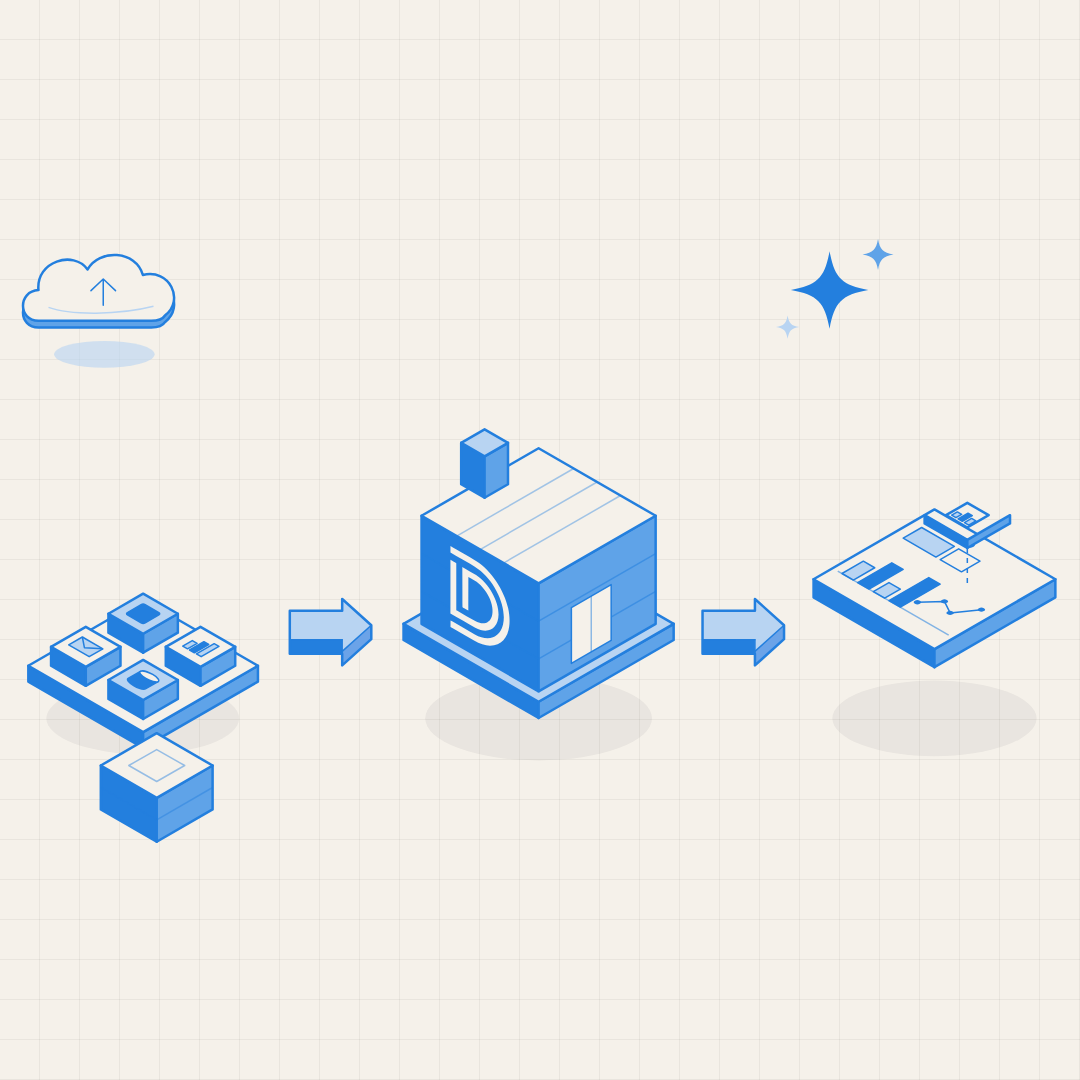
So what is analytics as a service, in practice, once the buzzword gets stripped away? It comes down to four repeatable stages.
How Analytics as a Service Actually Works
AaaS is a subscription or contract based model, not a one-time project. A provider takes ownership of the pipeline from raw data to finished report, and the business consumes the output rather than the plumbing.
- Connect the sources. Marketing tools, product data, CRM, finance systems, and any other operational data get pulled into a single environment.
- Model the data. Raw exports get standardized into consistent definitions, so “revenue” or “active user” means the same thing across every team looking at it.
- Deliver the output. Dashboards, scheduled reports, or an interactive data app get built for the specific decisions leadership is actually making.
- Maintain and evolve. Pipelines get monitored, new sources get added as the business grows, and the model adjusts as definitions change.
The provider is accountable for all four stages staying reliable. That accountability, not the dashboards themselves, is the actual product being purchased.
What's Included in an Analytics as a Service Engagement
Not every analytics-as-a-service company offers the same scope. Some position it narrowly as data analytics as a service, focused only on dashboards. A serious engagement generally includes:
- Data integration and pipelines: Automated connections between source systems and a central warehouse, so no one is manually exporting CSVs before a board meeting.
- Warehouse or lakehouse management: Storage and compute infrastructure that scales with data volume without someone on staff tuning it.
- Dashboard and reporting delivery: Business intelligence output built around the specific decisions leadership needs to make, not generic templates.
- Ongoing monitoring and support: Alerts and fixes when a pipeline breaks, before a stale number ends up in front of the board.
- Strategic advisory: Guidance on what to measure and why, not just how to display it.
A provider missing the last two items is closer to a one-time BI project than actual analytics as a service. That distinction matters, because ongoing accountability is what separates AaaS from a dashboard someone built two years ago and never touched again.
Analytics as a Service vs Building an In-House Data Team
Understanding the analytics as a service business model matters here, because it changes what you are actually paying for.
| Factor | In-House Data Team | Analytics as a Service |
|---|
| Cost structure | Salaries, benefits, tooling, management overhead | Single predictable service fee |
| Time to value | Months to hire, onboard, and build from zero | Weeks, using existing infrastructure and playbooks |
| Talent risk | Team knowledge leaves when someone quits | Provider retains institutional knowledge |
| Scalability | Requires new hires for new complexity | Scope expands within the existing contract |
| Control | Full internal control, full internal responsibility | Shared control, provider carries operational load |
Neither model is universally right. A company with a mature product and a genuinely differentiated data problem often needs an internal team eventually. A company still figuring out its core metrics usually gets there faster, and cheaper, through a provider that has already solved the same problem for other businesses at a similar stage.
Datum Labs Insight: Analytics as a Service is not a smaller version of an enterprise data team. It is a distinct analytics as a service operating model, built for companies that need production-grade data infrastructure before they have the headcount to justify building it themselves.When Your Business Actually Needs Analytics as a Service
Not every company needs AaaS on day one. It usually becomes the right call when one or more of these are true:
- Reporting is manual and getting slower every month, not faster, as more tools get added to the stack.
- Leadership is making decisions off numbers nobody fully trusts, because two dashboards show two different answers to the same question.
- There is no dedicated data hire, but the business has outgrown spreadsheets and one-off exports.
- A data hire exists but is buried in maintenance, spending more time fixing broken pipelines than producing new insight.
- The business is scaling fast and infrastructure needs to keep pace without a multi-month hiring cycle.
If none of these describe the business yet, AaaS is probably premature. If two or more do, the cost of waiting is usually higher than the cost of the service itself, measured in decisions made on bad data rather than in dollars.
What Analytics as a Service Costs, and Why It Usually Beats Hiring
There is no universal price tag for analytics as a service, because scope varies by data volume, number of sources, and reporting complexity. What is consistent is the comparison that matters: a single senior data hire comes with salary, benefits, software licenses, and management time, all before a single dashboard exists. An AaaS engagement replaces that fixed overhead with a service fee that scales with actual need, and it starts producing output in the first weeks of the contract instead of after a multi-month hiring and ramp-up cycle.
For most growing businesses, the real cost comparison is not AaaS versus an internal team. It is AaaS versus the cost of continuing to make decisions on manual, inconsistent reporting while a hiring search drags on.
The benefits of analytics as a service go beyond the invoice. Reporting stops being a monthly fire drill, leadership stops arguing over whose number is right, and the team that used to build dashboards gets to interpret them instead. The advantages of analytics as a service show up fastest in speed: a provider that has already solved this exact problem for other companies moves in weeks, not quarters.
As the analytics as a service (AaaS) market matures and more analytics as a service companies enter the space, differentiation increasingly comes from expertise rather than tooling. Data and analytics as a service used to mean off-the-shelf dashboards. Today it increasingly means a provider who understands the business well enough to know what should be measured in the first place.
For companies further along, this often evolves into advanced analytics as a service, where the provider layers forecasting, anomaly detection, or predictive modeling on top of standard reporting. That is a natural next step once the basics are solid, not a starting point.
Conclusion
Analytics as a service is not a workaround for companies that cannot afford a data team. It is a deliberate choice to buy a working outcome instead of building the infrastructure behind it from scratch, and for most growing businesses, it gets leadership to trustworthy numbers faster than hiring ever could.
If your team is still stitching together exports before every leadership meeting, or if two dashboards cannot agree on the same number, that is usually the sign the current setup has reached its limit. Datum Labs works with growing businesses to build data infrastructure that actually holds up as the company scales, without the overhead of hiring a full internal team first. If that is where your business is right now, it is worth a conversation about what an analytics-as-a-service model would look like for your data.
Heading 1
Heading 2
Heading 3
Heading 4
Heading 5
Heading 6
Lorem ipsum dolor sit amet, consectetur adipiscing elit, sed do eiusmod tempor incididunt ut labore et dolore magna aliqua. Ut enim ad minim veniam, quis nostrud exercitation ullamco laboris nisi ut aliquip ex ea commodo consequat. Duis aute irure dolor in reprehenderit in voluptate velit esse cillum dolore eu fugiat nulla pariatur.
Block quote
Ordered list
- Item 1
- Item 2
- Item 3
Unordered list
Text link
Bold text
Emphasis
Superscript
Subscript





.png)
.png)
.png)
.png)


.png)