

Ask AI for a summary about Datum Labs




We turn complex data into clear insights. Our comprehensive data analytics services, from strategy to execution, drive business growth and innovation.
.png)
.png)
.png)
.png)



As the portfolio grew, so did the complexity of keeping track of what was active, what was expiring, and what it all cost. The data existed. Contracts were recorded. Transactions were logged. But there was no single interface that connected those records to the people responsible for acting on them.
Finance assembled spend summaries manually. Operations chased renewal deadlines through calendar reminders and email threads. Department leads had no direct visibility into their own vendor activity. The bigger the portfolio grew, the more coordination it required just to answer basic questions.
Organizations managing large vendor portfolios face a recurring operational problem. Contract records accumulate across procurement tools, spreadsheets, and renewal calendars. Spend data lives in finance systems. Department ownership sits somewhere else entirely. None of those sources are designed to answer the question that operations and finance teams ask most often: what do we have, what does it cost, what is expiring, and who owns it?
For Techsource, the data existed. The failure point was the absence of a working interface that connected it to the people responsible for acting on it. At a certain portfolio scale, that becomes a material operational risk. Missed renewal windows, untracked spend growth, and no department-level visibility carry financial consequences.
The core problem was not a data problem. It was a usability problem. Contract and transaction records lived in a backend system but could only be accessed by whoever maintained it. There was no way for a department lead to pull their own spend view, no structured process for requesting a new contract or flagging a cancellation, and no automated signal when a renewal window was approaching.
There was also no governed access model. Sensitive spend data, vendor terms, and contract metadata were either locked away or exposed without meaningful role separation. The gap between the data and the people who needed it was structural.
Datum Labs designed and built a production multi-tenant data portal that connects contract, vendor, transaction, and department records into a working operational system.
The organization dashboard gives users a real-time view of active contracts, annual spend, savings, top vendors, spend by department, and upcoming renewals. An insights workspace layers in date-range filtering, owner and department filters, spend trend charts, and transaction-level analysis. A renewals workspace surfaces term end dates, notice deadlines, status, and owner assignments in one place.
Beyond visibility, the portal handles workflows. Users can submit structured requests for missing contracts, new vendor additions, cancellations, renewals, and change requests. Scheduled renewal reminders run automatically against contract term data. Contract documents attach directly to records. For organizations managing multiple entities, a portfolio mode aggregates reporting across the full account structure.
The data layer runs on PostgreSQL with Drizzle ORM and Zod schemas. Core entities include organizations, users, memberships, departments, vendors, contracts, transactions, reminders, attachments, and comments. Transactions and contracts are joined to power spend analytics and operational views. Multi-tenancy is structural, built into the access model from the start rather than applied as a filter.
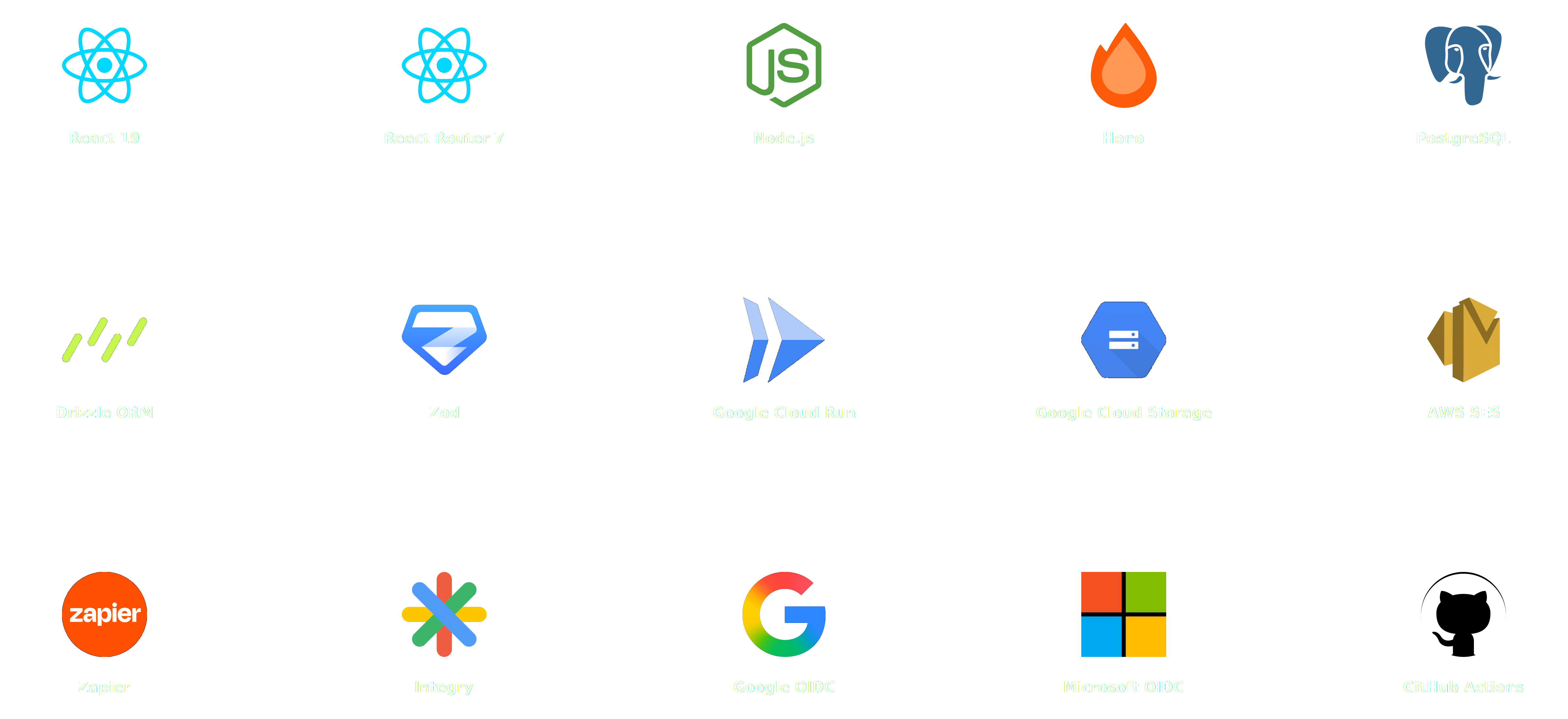
The backend runs on Node.js with Hono on Google Cloud Run. Authentication supports Google OIDC and Microsoft OIDC. Email runs through AWS SES. Integrations extend through Zapier webhooks and the Integry marketplace. The frontend is built in React 19 with React Router 7, Tailwind, TanStack Table, and Recharts.
Contract intelligence that previously required manual assembly is now accessible as a governed, role-scoped operational interface. Finance can pull spend reports without requesting a data export. Operations has a renewals workspace with deadlines and status visible at once. Department leads can see their own vendor activity directly. Workflow requests follow a structured process tied to actual records. Renewal reminders run on schedule without manual intervention.
This is what a data application layer looks like in practice. Not a dashboard on top of a database. A system where users view data, act on it, manage workflows, and operate with confidence that what they see is accurate and current.
If your business data exists but your team is still coordinating around it manually, the gap is in the application layer, not the data itself.

Ask AI for a summary about Datum Labs
We turn complex data into clear insights. Our comprehensive data analytics services, from strategy to execution, drive business growth and innovation.

